
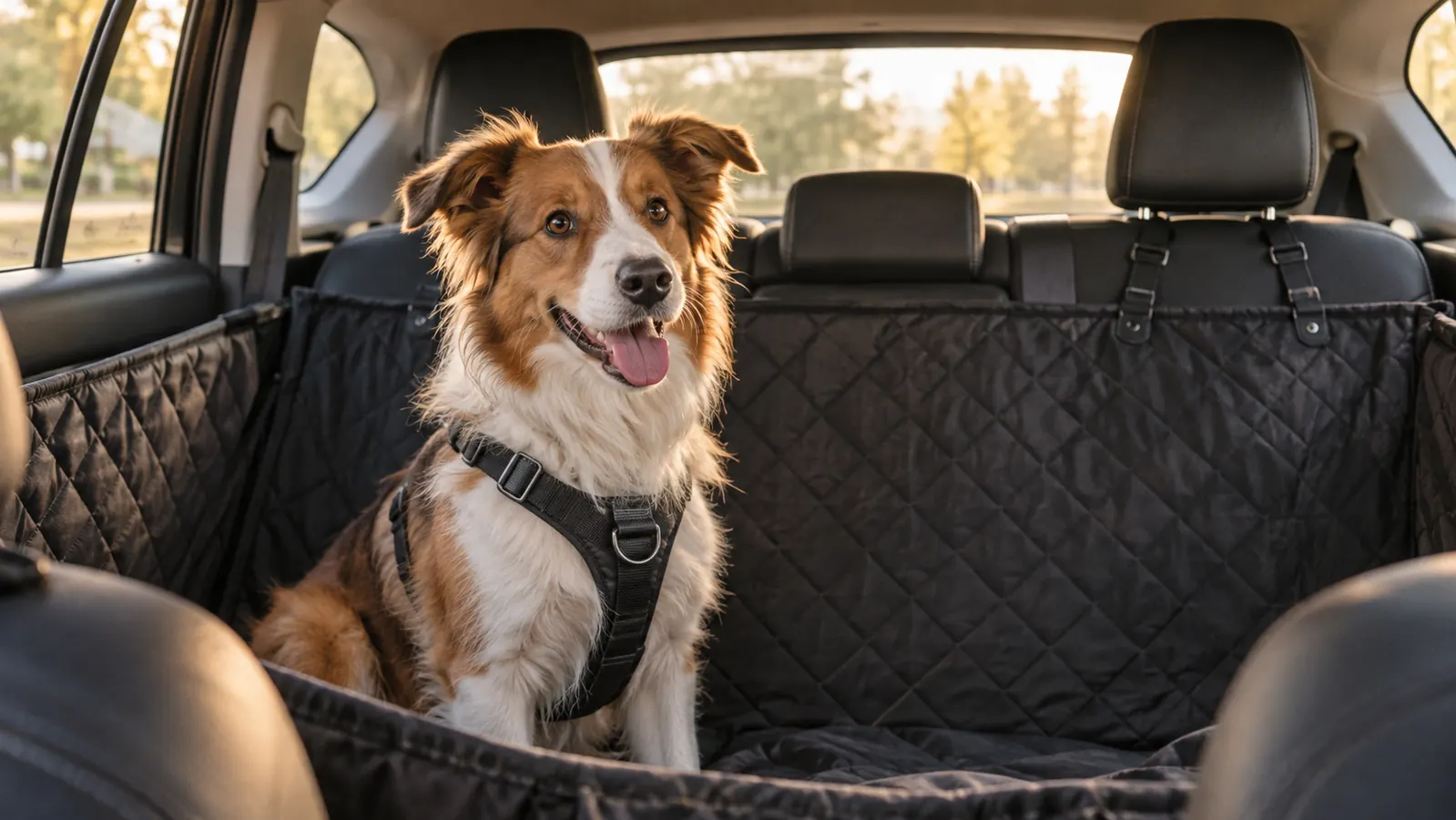
Biscuit is a 28-pound beagle mix with two settings in the car: asleep, or trying to get into my lap. She is six. For her first four years I drove her the way most folks do, which is to say I did not think about it at all. She rode on the back seat of my 2018 Honda CR-V with a cheap plain tether clipped to her collar, and I told myself that counted as being careful. Then one spring morning outside Amarillo I had to brake hard for a truck pulling out of a feed store. She hit the end of that tether and coughed for the next twenty miles. I pulled into a station and sat there with both hands on the wheel, not moving. That was the week I stopped guessing.
Here is the short answer. A car harness only works if it is fitted properly, put on before the dog gets worked up, and clipped to the seat belt rather than the collar. Do all three and the rest is routine. Skip any one of them and you have bought an expensive strap. The one I landed on is the Kurgo Enhanced Strength Tru-Fit Smart Harness, size Medium, with the 10-inch seat belt tether that comes in the box. I bought it in April 2025, a few days before my drive up to Colorado Springs, and I have owned it 19 months. It has made four of those nine-hour drives with me since. What follows is the order I do things in, and the mistakes I made getting there.
The harness that finally kept Biscuit in her own seat
Medium suits a 28-pound dog with room to spare. The box holds the harness and the 10-inch seat belt tether with a steel carabiner. Mine has been on four long drives and 19 months of errands.
Amazon Check Today's Price on Amazon →Step 1: Fit it before you start the engine, not at the gas station
The Kurgo has five points of adjustment, and on my first weekend I got maybe two of them right. I put it on Biscuit in the driveway, decided it looked fine, drove to the post office, and by the time I got home the padded chest plate had slid around to her side. That was not the harness being wrong. That was me not fitting it.
What worked was doing it in the house, with her standing still and me squatting down at her level, and taking a full five minutes over it. The padded chest plate should sit on her chest, not up on her throat. You want to slide two fingers under every strap and no more than that. Walk her around the yard for a few minutes after each change, because straps shift once a dog moves. It took me two tries that first weekend and I have not touched the adjustment since, which tells you it is worth the twenty minutes up front.
Two housekeeping notes from the listing. It is hand wash only, so mine gets washed in the kitchen sink with a little dish soap, rinsed, and hung over the porch rail in the shade. Do not put it in the machine. The weight range on a Medium runs up to 75 lbs, so Biscuit has plenty of room inside hers, and it carries a lifetime warranty, which I have been glad to have and have not had to use.
Step 2: Let the dog wear it around the house for a week first
Biscuit backed away from the harness for about a week. Nothing dramatic, no crying, just a slow retreat every time I picked it up, like the thing was going to ask her for money. I did not force it. I set it on the floor near her food bowl. I put it on her for two minutes while the coffee brewed and took it right back off. The next day, five minutes. By the end of that week she walked over to me when I picked it up, and she has not argued about it since.
This matters more for a pulling dog than for any other kind, because a nervous dog braces. A braced dog in a harness fights that tether for the whole drive, and then you decide the harness does not work and you go back to the collar. It is not the harness. It is the order you did things in. If your dog already wears a harness for walks, this step takes one afternoon. If she has never worn one, give it the week.
I will tell you the honest part now, the thing the product page cannot tell you. Biscuit still pulls on every walk we take. A harness does not train a dog. It is not supposed to. All it has to do is keep her in one spot when I hit the brake, and on that count it has done its job for 19 months.
A harness does not train a dog. Biscuit still pulls on every walk. What it does is keep her in one place when I hit the brake.
Step 3: Clip the tether to the seat belt, never to the collar
This is the step I would paint on a sign at every rest stop between Lubbock and Raton. Before April 2025 I clipped a plain tether to Biscuit's collar. That is what sent her to the end of the strap and made her cough. A collar takes all of that force at the throat. A harness spreads it across the chest, which is the whole point of the thing.
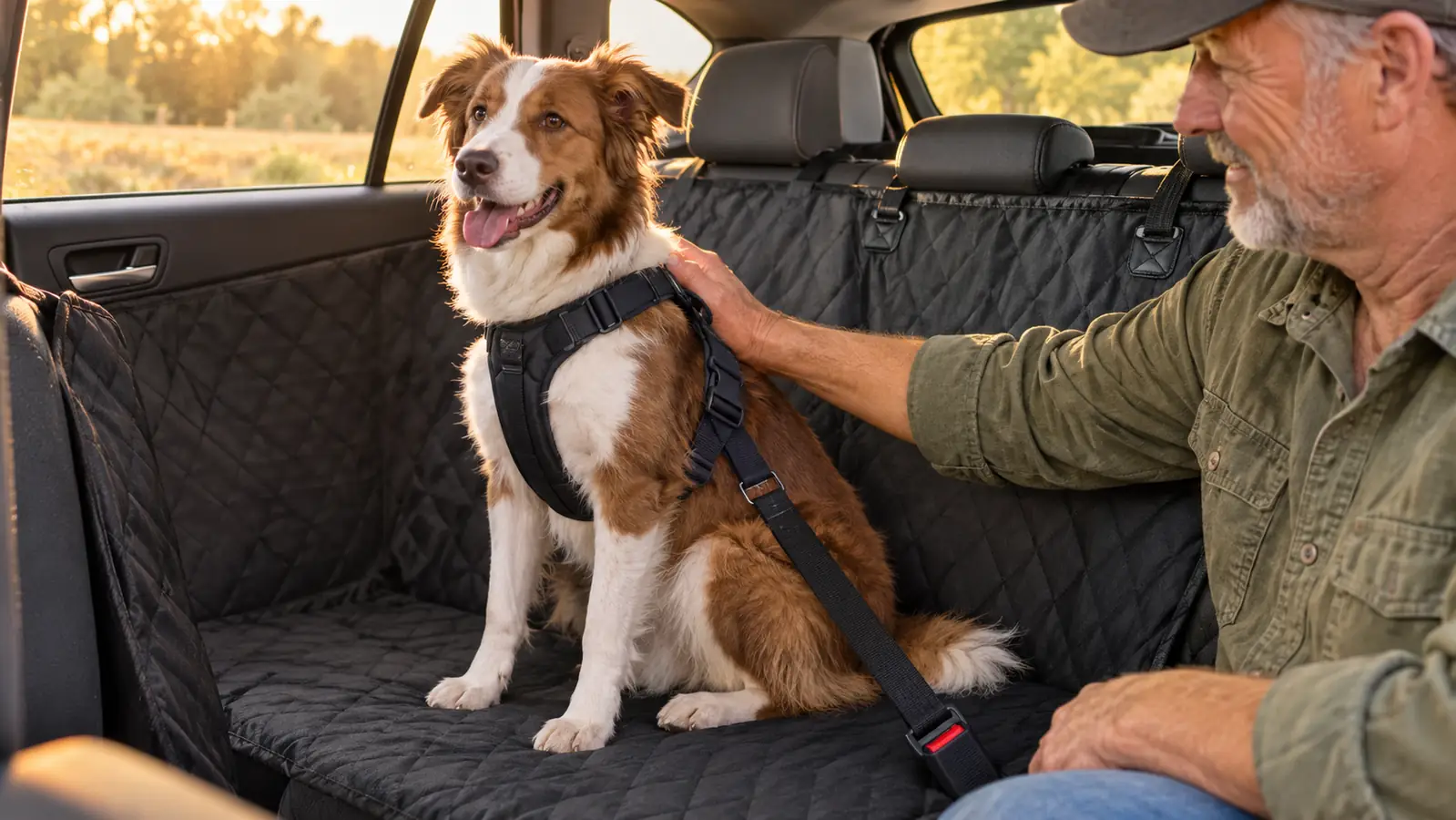
The Kurgo comes with a 10-inch seat belt tether and a steel carabiner on one end. The carabiner clips to the harness. The other end is a loop that the seat belt runs through, and then you buckle the belt as usual. Set the belt so it locks, either by pulling it all the way out and letting it ratchet back or however your vehicle does it. In my CR-V the belt locks when I pull it out to the end, and I check it every single time before I put the key in.
Ten inches is short on purpose. Biscuit can stand up, turn around, and lie down. She cannot reach the front seat and she cannot reach Juniper's carrier on the other side of the back seat. She found that out the first afternoon in the driveway and has not tested it since. I keep the tether clipped to the harness strap when it is not in use so I am never hunting for it in a parking lot.
About the crash claim, because somebody will ask me. The listing describes this harness as crash tested. I have never tested it and I have never been in a crash with the animals in the car, so I am only repeating what the box says and nothing more. What I can tell you is what I have watched with my own eyes, which is a 28-pound dog held in one spot through four nine-hour drives and a hard stop on Highway 87.
Step 4: Set the spot up before the dog gets in
Biscuit rides on the driver's side of the back seat, on a quilted seat hammock I bought in March 2025. Juniper's carrier sits on the passenger side, on top of that same hammock, with the seat belt run through the carrier strap. Neither animal is ever loose in that car. Not for a nine-hour drive to Colorado Springs and not for a two-mile run to Dr. Pruitt's office. That rule does not bend for a tired Tuesday.
The order I load up matters. Hammock first, then the tether looped through the belt on Biscuit's side, then Juniper's carrier buckled in, then Biscuit. If I put the dog in first she stands on the hammock while I am trying to smooth it out, and everything takes twice as long. There is also a canvas tote on the back floor with the bowls, the folded litter box, a zip bag of her usual litter, and a gallon jug of water from home. It does not move, because it is wedged in there between the seat and the tote with the bowls clipped to the handle by their carabiners.
Step 5: Make the stop a routine so the harness means a break
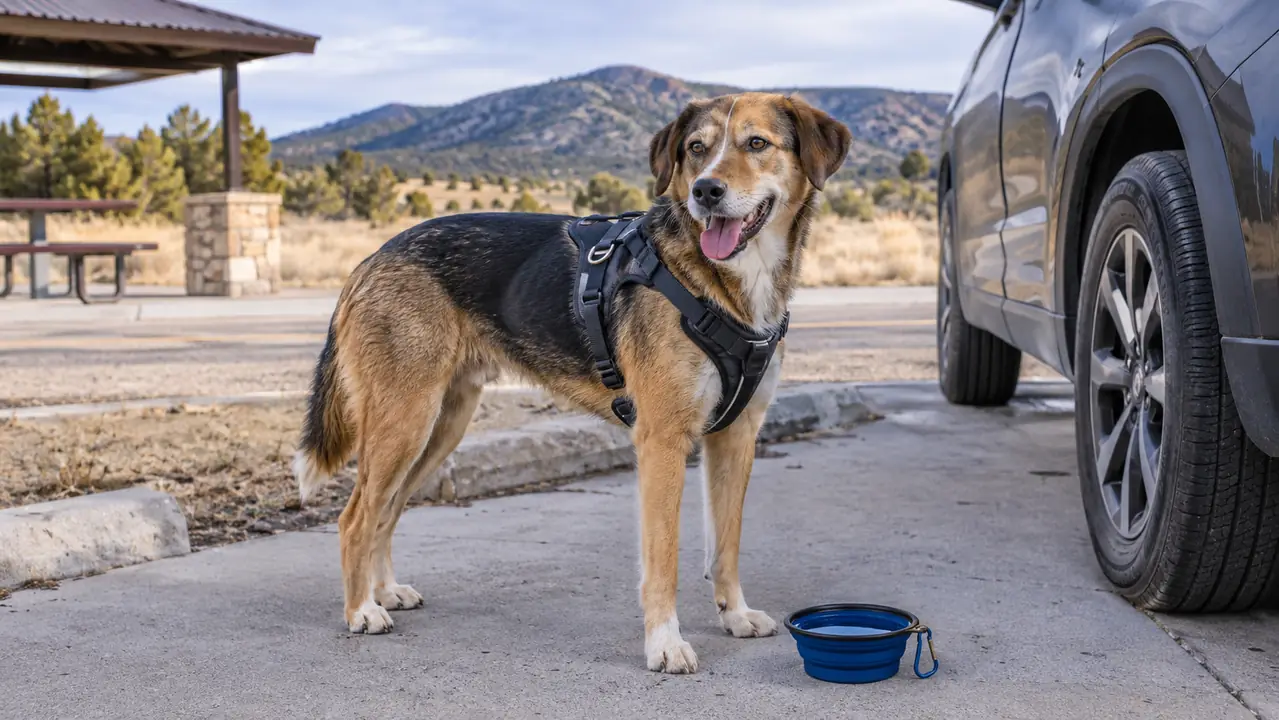
We stop once, long, at Raton, New Mexico. Nine hours in one day is a lot of sitting for a dog, and it is a lot for me too at 61. When I open the back door, Biscuit waits. Then she gets out in the harness, and the harness stays on. It is easier to walk her in it than to wrestle it back on with a dog who wants to sniff every inch of a parking lot, and keeping it on means the routine is identical every time. She knows what it means now. Harness on, we are going somewhere. Harness off, we are home.
I walk her on a leash for ten or fifteen minutes, away from the trucks, and then she gets water in her bowl, the 12-ounce one that clips to the tote. She drinks at every stop now instead of waiting until we arrive, which she never used to do back when the water jug stayed in the car. Juniper gets her litter box offered on the back floor with the doors shut, and I do not rush her. She ignored it the first time I tried, back in October 2025, and used it the second time. That is the whole stop. Twenty-five minutes and we are back on the road.
The last thing I do before I pull out is check the tether. Every time. Not because it has ever come loose, but because I am the one who clipped it, and I would rather spend eight seconds being sure than spend nine hours wondering.
What Else Helps
The harness is the piece that matters, and it is not the only thing. The seat hammock does more work than people give it credit for. Before mine, Biscuit slid on the bare leather every time I took a corner, and a sliding dog is a dog that scrambles and fights the tether. The hammock keeps her planted, and it catches what comes up on the winding roads, which for us is a real thing. Cleaning up after a sick episode went from an hour of scrubbing to ten minutes. Hair still works into the seams, and that has not changed and probably will not.
The other thing that helps is not gear at all. It is having the same routine in the same order every single time, so the dog knows what happens next. Same hammock, same side of the seat, same tether, same stop in Raton. Biscuit is not a brave dog and she is not a calm traveler by nature. She is calm because nothing surprises her anymore. That took four trips to build and it costs nothing to keep.
Nineteen months, four long drives, one dog who stays put
If you are starting where I started, with a collar and a plain tether, this is the piece to change first. Medium, five points of adjustment, hand wash only, tether included. Measure your dog and check the listing before you order.
Amazon Check Today's Price on Amazon →